Science & Innovation

U.S. Soy, Nepal strengthen partnership to promote protein awareness

U.S.
Kyle Durham and Kevin Roepke
By Tourism Times
Published at : 30 Oct 2025, 3:32 PM

USSEC lauds Nepal’s growing focus on nutrition and sustainable agriculture through the Right to Protein initiative.

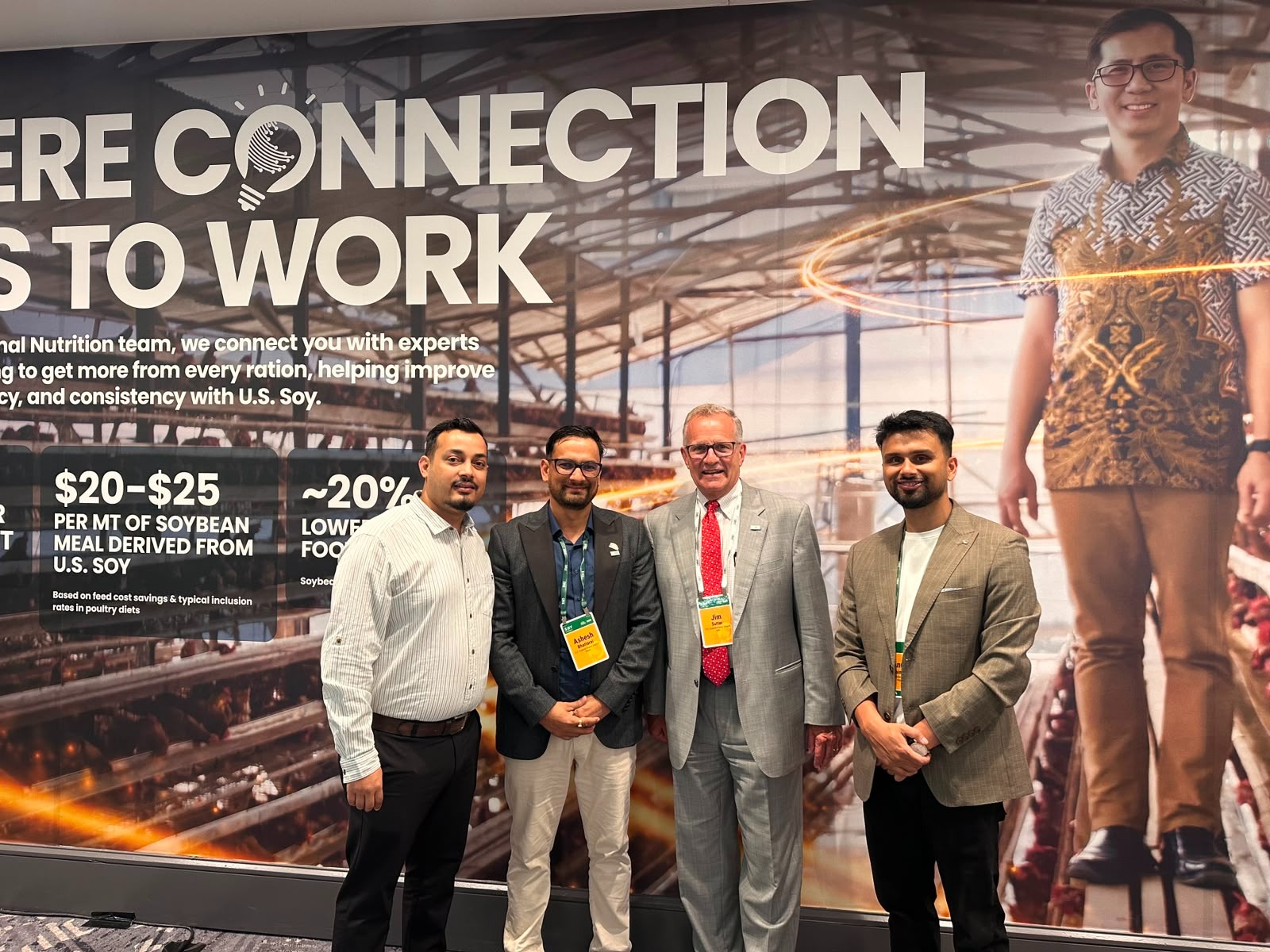
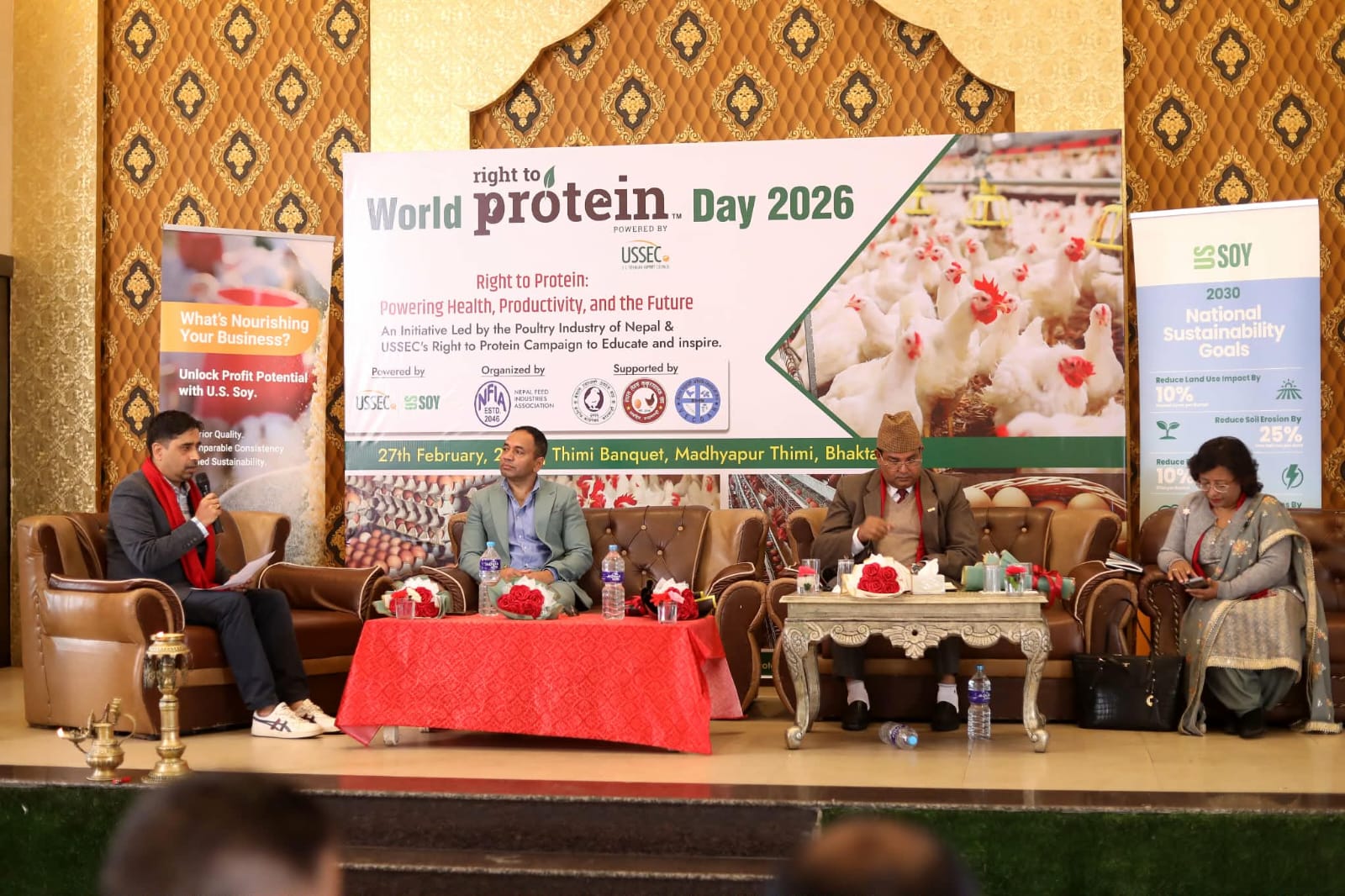
KATHMANDU: The U.S. Soybean Export Council (USSEC) has commended Nepal for advancing protein awareness and sustainable food practices, highlighting the country’s growing engagement through the Right to Protein Run initiative.

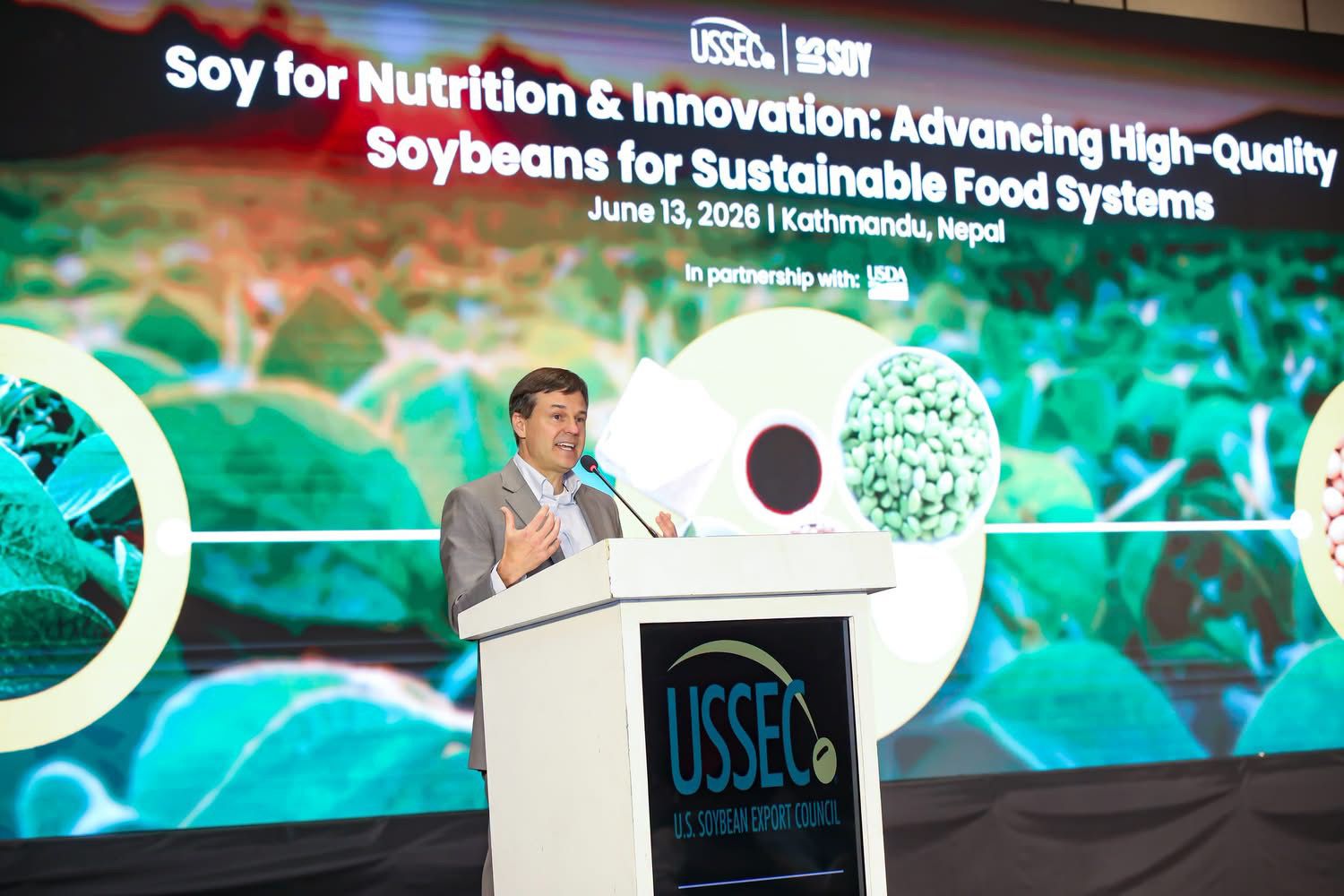
According to Kevin Roepke, Executive Director of USSEC for the MENASA region, American soybean farmers are at the center of this global movement to promote sustainable protein sources. “The heart and soul of USSEC are our farmers,” Roepke said. “Internationally, our focus is twofold — ensuring that U.S. soy has access to markets and highlighting how it stands apart from other sources.”

Roepke emphasized that sustainability remains a key differentiator for U.S. soy. “Our carbon footprint is the lowest compared to soy from other origins, and our deforestation record is impeccable,” he said. The council’s certification schemes — Sustainable U.S. Soy and Fed with Sustainable U.S. Soy — allow feed companies to use these marks only when at least 60% of soy ingredients are verified under the Soybean Sustainability Assurance Protocol (SSAP).

USSEC noted that Nepal’s imports of U.S. soy have increased by 38% this year, driven largely by the growth of the country’s poultry industry. “Nepali poultry producers increasingly prefer U.S. soy — whether as beans or meal — because of its digestibility, sustainability, and consistent quality,” Roepke added.

Kyle Durham, an official with the United Soybean Board and a sixth-generation farmer from Missouri, said Nepal’s poultry sector is expanding rapidly. “The industry is booming. Every visit, you can feel the momentum,” Durham said. “There’s tremendous opportunity for collaboration — for U.S. and Nepali farmers to grow together.”

Durham also praised Nepal’s hospitality and engagement in the global nutrition dialogue. “U.S. soy used in Nepal is packed with all the essential amino acids that make it a high-quality protein. It’s exactly what developing economies need as they look to nourish their growing populations,” he said.

Both representatives stressed that the collaboration between the U.S. soy industry and Nepal goes beyond trade, reflecting shared goals for sustainability, innovation, and improved global nutrition.

Tags: #Technology

Comment