The Tourism Times | Breaking tourism-related news from Nepal and beyond
°C
Environment
T3 EXCLUSIVE: NatGeo’s weather station near Mt Everest summit gathers dust
By
Tourism Times
Published at : 19 Apr 2026, 1:55 PM
KATHMANDU: The installation of the world’s highest automatic weather station had made headlines globally in 2022, but it turned out to be rubbish in just four years.
The weather station at Bishop Rock (8,810m) near the summit of Mount Everest has now posed risks rather than transmitting data either to the National Geographic Society or Nepal’s Department of Hydrology and Meteorology, officials have claimed.
“This spring as well, NatGeo is sending a team of experts and guides to attempt to remove the AWS from Bishop Rock,” Dinkar Kayastha, officer at the Department of Hydrology and Meteorology under the Ministry of Energy, Water Resources and Irrigation, confirmed.
A source confirmed that climate scientists and explorers Baker Perry and Arbindra Khada, among others, will be joining Lukas Furtenbach’s Expedition on Everest to remove the Bishop Rock station and carry out ‘maintenance’ of two other stations placed at South Col and Camp II.
The expedition team has been trying to remove the AWS from 8,810m since last year as it remained dysfunctional, according to Kayastha. In a countermove, the weather station was touted as the world’s highest after China installed another AWS at the height of 8,800m on the Tibetan side of Mt Everest.
World-renowned scientists and climbers including Tom Matthews and Baker Perry from Appalachian State University, as well as Conrad Anker and Dawa Yangzum Sherpa, among others, were part of the NatGeo Rolex expeditions from installation to maintenance of the weather stations in the past.
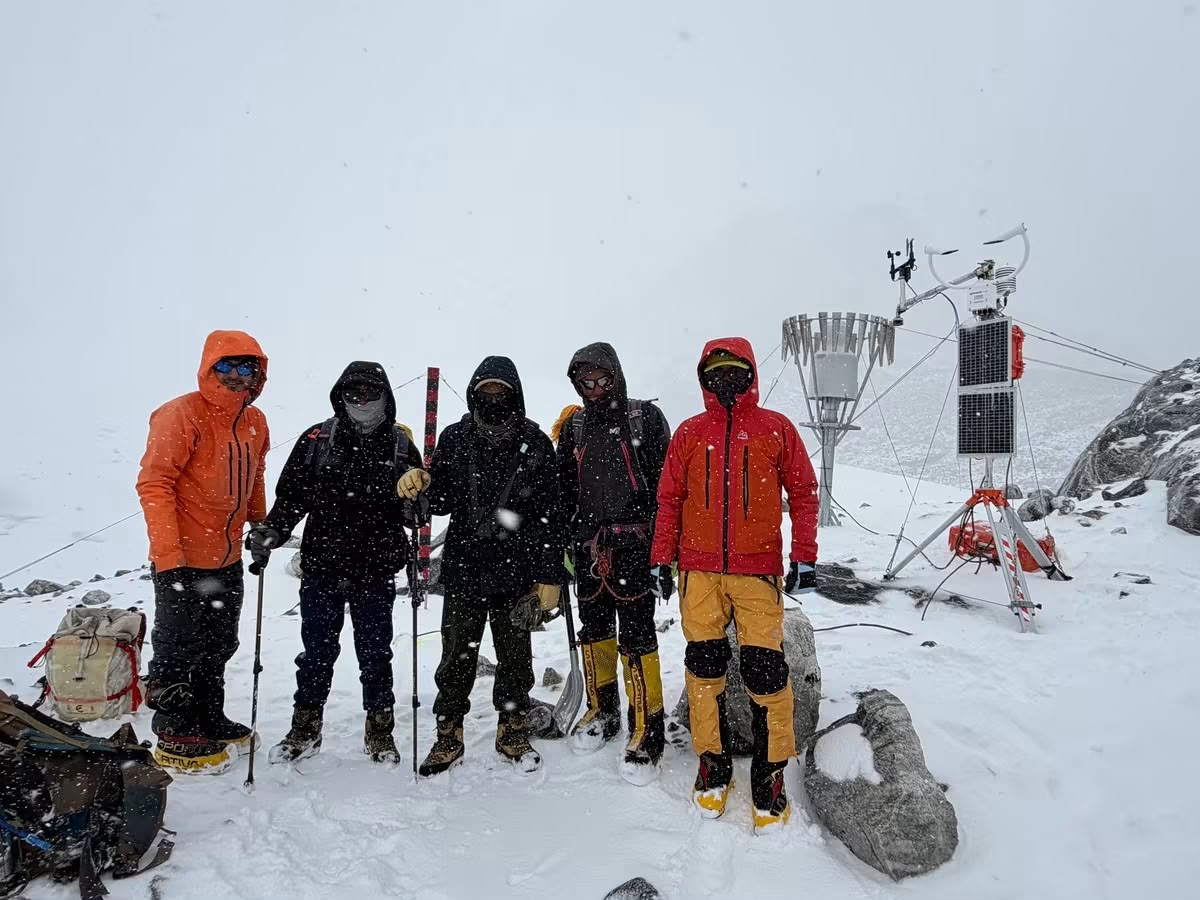
Five automatic weather stations were installed during NatGeo’s Rolex Perpetual Planet Extreme expedition on Mt Everest organised by the National Geographic Society in 2019 and 2022. Weather stations were placed at Bishop Rock (8,810m), South Col (7,945m), Camp II (6,464m), Everest Base Camp (5,315m) and Phortse (3,810m).
“Four other stations somehow seem functional, though the stations at South Col (7,945m) and Camp II (6,464m) often faced with technical glitches,” DHM officials said. During the celebration event held at Yak and Yeti last week, NatGeo officials strongly urged the DHM to take over responsibility for operating four stations, as they will possibly be removing the Bishop Rock station this spring.
A memorandum of understanding between DHM and NatGeo was signed to operate all five AWS, providing near real-time information about mountain conditions. Under the MoU, the National Geographic team is mandated to fully operate the stations until the end of 2025 before handing them over to the Government of Nepal. Technology transfer will be done by the end of 2026, the MoU states.
According to DHM officials, the modality for further operation is being discussed with the NatGeo team. “We can’t fully take over the AWS in haste,” the officials said, adding that it would need further support to operate the Camp II and South Col-based stations. “Operating the Phortse and Base Camp stations is not an issue, but the two other high-altitude stations would be a burden to Nepal if taken over in haste,” officials shared.


 °C
°C 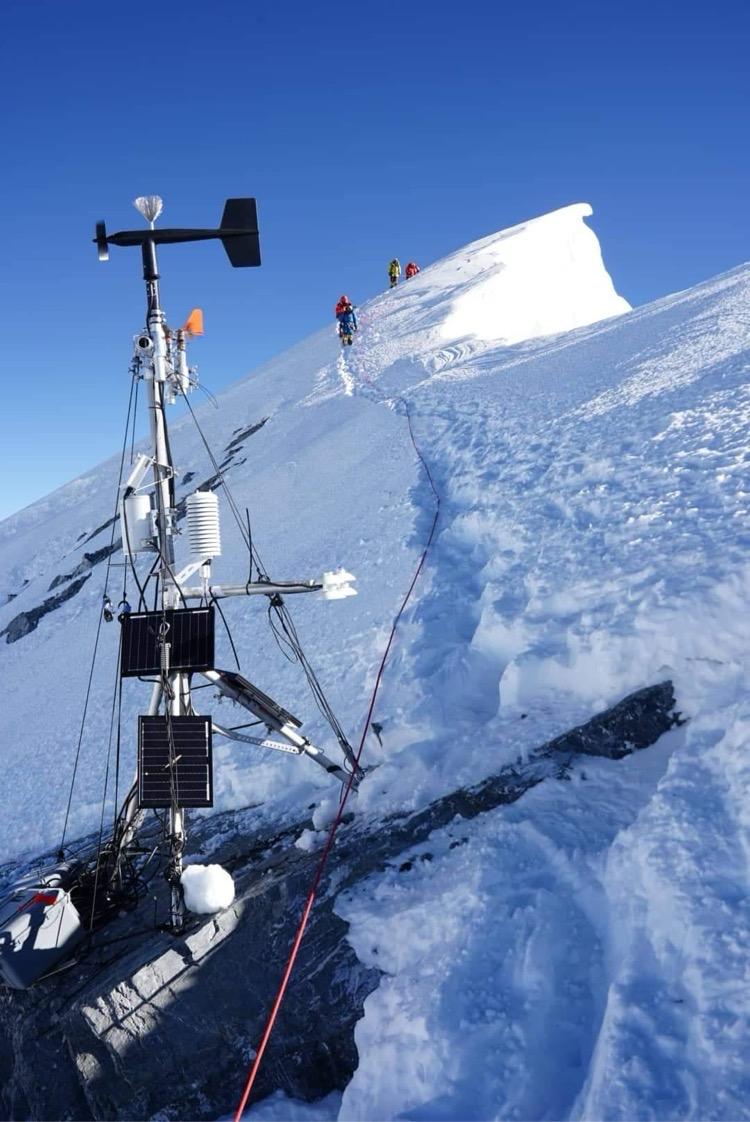





Comment
Tom Bennett
Interesting Story. Sounds Geopolitics On The Roof Of The World. Remove The Trash And Make Everest Clean.