

 °C
°C Modern Mustang – A trek in the once-forbidden Himalayan kingdom
Sometimes it is a person or place that sets the tone of a trip. For me, it was a wall. More specifically, a 1,000-foot-long rock wall that divided some buckwheat crops from the wild Himalayan peaks beyond.
“This is the longest Mani wall in Nepal,” said my trekking guide Raju Gurung, who explained that “mani” stones are often placed in stacks along trails and ancient caravan routes that were under the influence of Tibetan Buddhism. Inscriptions were on many of the rocks. “When you walk along the wall,” he said, “you render respect and good will for all beings.”
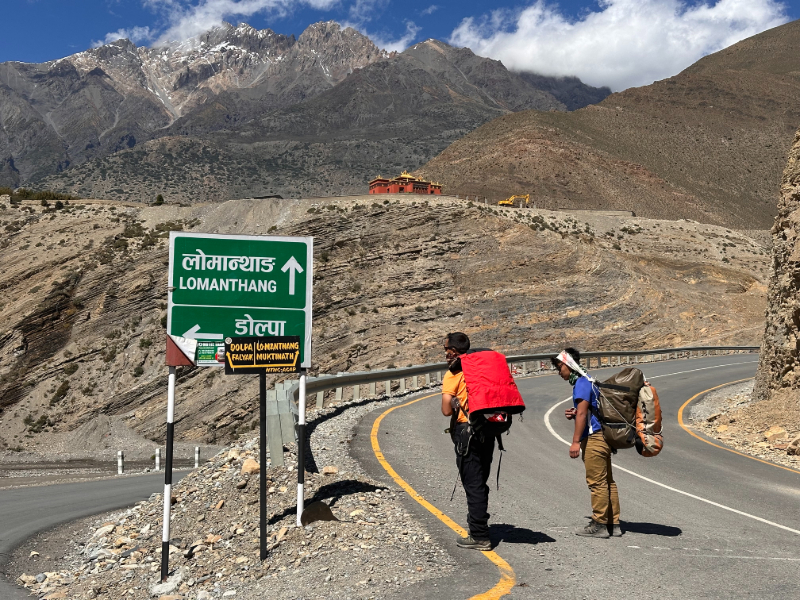
Raju’s nugget of wisdom was the first of many and a warm welcome to Upper Mustang, a remote valley in northern Nepal that was once known as the Forbidden Kingdom. For decades, this isolated frontier region was closed to all foreigners due to its proximity to Tibet and the Chinese border.
I liked the idea of a pure heart when I trekked and good will for all. Would I find it here, in a place that’s only recently opened? It was 1992 when the world first got a glimpse of Mustang’s stark, arid landscape, timeless villages, and Tibetan-influenced culture. As someone who seeks out the untrodden path when traveling, it’s been on my personal bucket list since.
By trekking through this valley, I hoped to experience something akin to the mythical Shangri-La, a place barely touched by the modern world – someplace rare, authentic, pristine. The reality, I discovered in Mustang, is something quite different.
***
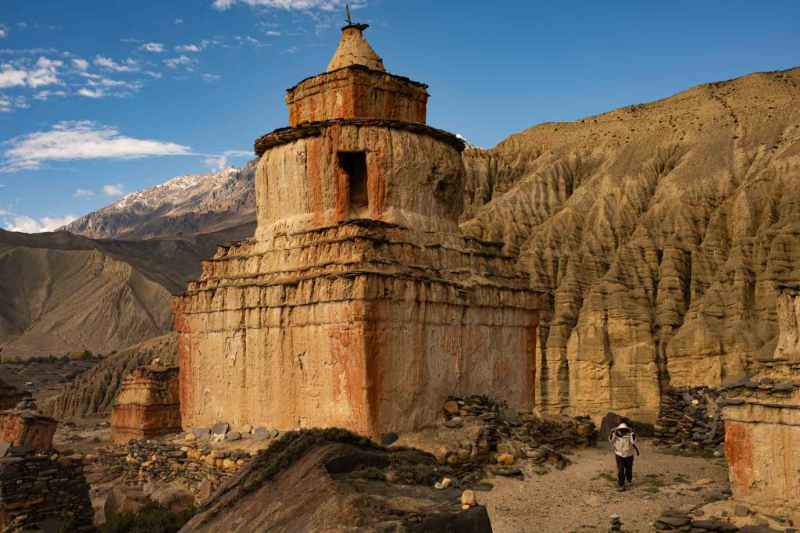
After walking along the Mani Wall, the trail continued through a desert landscape reminiscent of the red-rock wonderlands of southern Utah. To our left was a partially crumbling stupa, centuries old and bell-shaped.
Legend has it that the great Lama Padmasambhava – also known as Guru Rinpoche, Lotus Born, and the Second Buddha of Tibet – passed by here in the 8th century, teaching, practicing, meditating, and taming demonic forces hostile to the Dharma, or the truth.
“It is believed this Mani Wall represents the demon’s intestines that Guru Rinpoche subdued,” Raju said. “The heart of the demon was buried in the stupa. And the blood of the demon was splattered in the rocks of these mountains.”
Getting to Mustang is neither cheap nor easy. A special trekking permit is required, and foreigners must be accompanied by a Nepali guide. I booked my trek with a Kathmandu-based outfitter called Friends Adventure Team.
The plan was to do the classic Mustang trek, which typically takes 12 to 14 days and covers about 100 miles, depending on the exact route. Unlike the Annapurna Circuit or Everest Base Camp, which sees thousands of visits each year, Upper Mustang trek remains a restricted region, receiving only a few hundred visitors annually.
****
As I hiked the stretch above 13,000 feet between the villages of Ghiele and Samractchen, my mind drifted and I started to worry.
The second-to-last day of the trek would be the hardest, Raju said, as he outlined a grueling 18-mile stretch with a harrowing descent at the end.
“In Buddhism, we say be in the present, not in the past or future,” said Raju, when I told him of my trepidation. He was right -- there was no sense in fretting about what lay ahead.
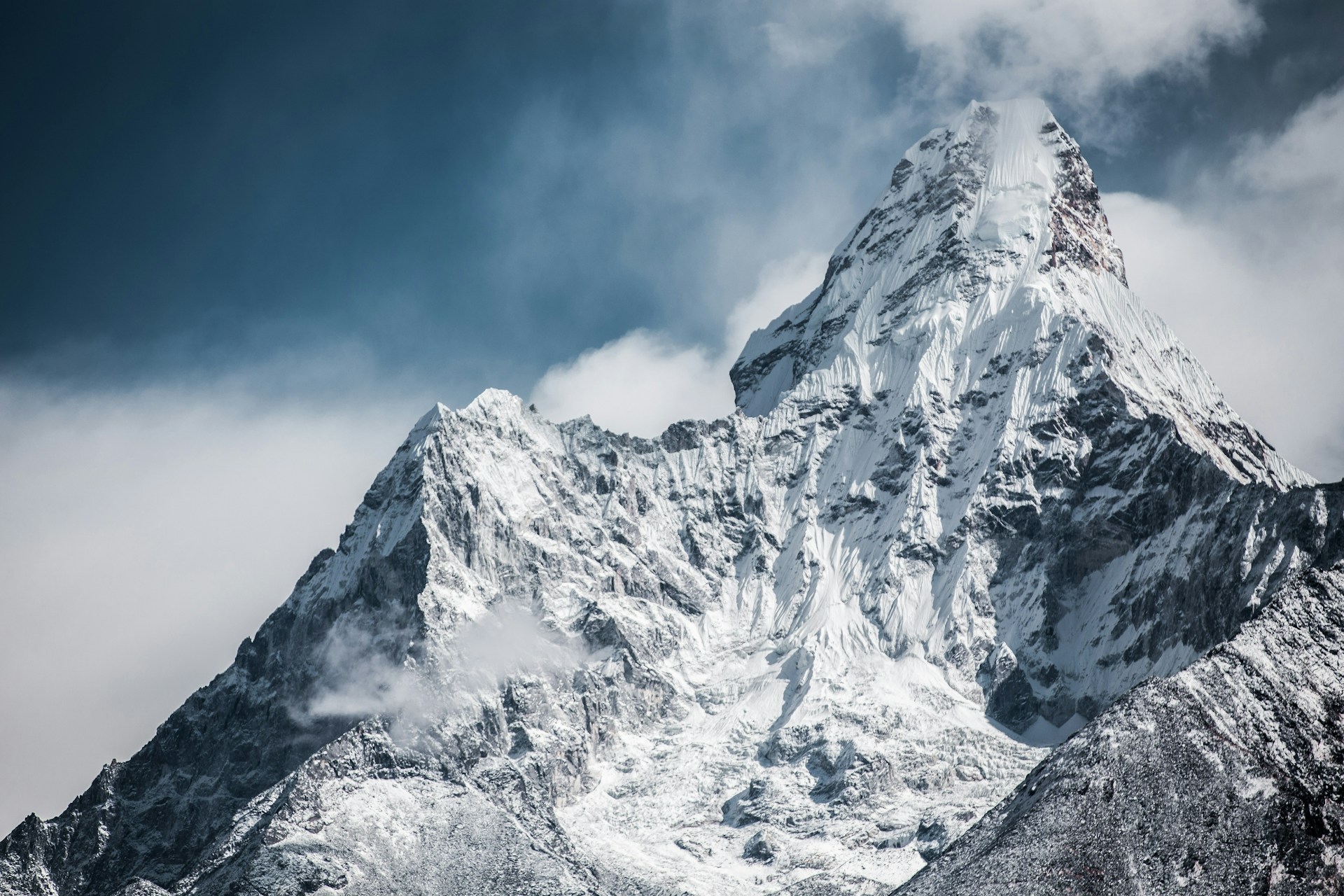
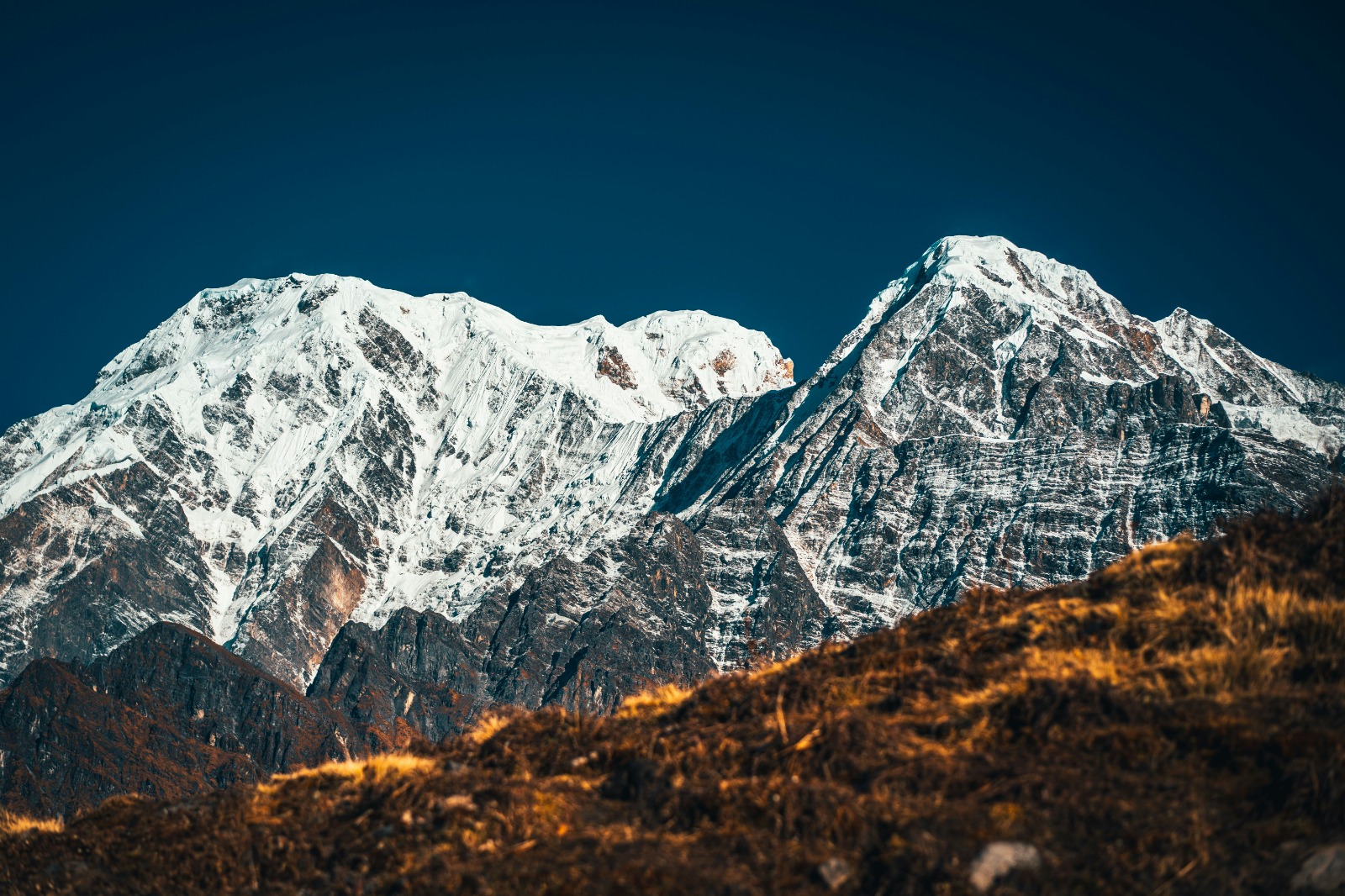
Instead, I focused on my breathing – taking one step at a time – and the scenery around me: the icy fortress of Damodar to the east and the giants of the Annapurna Range to the south. The October weather was dry and glorious.
The trail passed a lone juniper tree and descended steeply into a red-rock chasm. We crossed a stream and zig-zagged back upward, until we reached the entrance to Chungsi Cave, a wonder sculpted by time and nature. Once inside, I walked counterclockwise around the main shrine, through a darkly lit passageway.
A monk stood beside a table with dozens of candles. He began pouring butter into them as the cave filled with the aroma of incense. The monk, whose name was Narayan, was from Lhasa, Tibet, and had traveled along the new road to reach this sacred spot.
“If there was no road, we would’ve had to walk the whole way here, carrying everything on our back and with the help of donkeys,” said Narayan.
As we sipped tea by the cave’s entrance, Raju explained that for Tibetans, there are several pilgrimage spots in Nepal. “Chungsi Cave is one of those spots,” he said. “We believe the Second Buddha of Tibet meditated here in the 8th century.”
I didn’t know much about Guru Rinpoche before this trip, but I was fascinated by the hallowed world that he blessed personally. Buddhists believe that when we breath the air that has moved through these holy places, then our body and health will be improved.
“When we go to any of these places,” Raju said, “we feel inspired.”
***
One of the highlights of any Mustang trip, Lo Manthang is the former capital of the kingdom of Lo, sitting in the northern terminus of the valley.
I was feeling grateful for reaching the halfway point of the trek. When a group of late-night partiers in the hotel courtyard threatened to dampen my spirits by keeping me up all night, I remembered the Mani Wall and rendered good will for them all.
The next afternoon, I had hoped to visit the king’s former palace in the center of town. But the owner of the Lotus Holiday Inn pointed out that it was already closed for the day. Thankfully, he felt bad about the ruckus the night before and offered to help.
“I know someone who can let us in,” said Pema Wangel Bista. “Come with me.” Minutes later, I followed him through a narrow alley and under a gate as we entered the old walled city, where Pema said about 800 monks currently live. He was friends with one, who graciously let us inside the palace for a quick look.
I felt like Indiana Jones as I climbed ladders leading to the top of the fortress-like castle, which was made of mud, stone, and wood. Wispy clouds swept across the sky as the sun neared the horizon. Distant barren peaks were capped with crumbling old forts.
Later that night, I thanked Pema for the off-hours tour, as we sat in the coffee shop adjoining his popular hotel. Pema told me that he’d grown up in Lo Manthang, and we discovered we were born in the same year. Surely, he had seen much change since 1967.
“Too much change here, but it’s good,” he said, referring to the impact of the new road. “We used to have to walk 10 to 12 days just to reach Pokhara one way. If people became seriously ill, the chance of survival was less, especially if a woman was pregnant.”
“Now everything is new and modern. Today, most Nepalis want to go abroad to get their education in the USA or Canada. Before the new road was built, hardly anyone ever left Mustang. Within the last few years, it’s all changed.”
Pema estimated someone from about one-third of the homes in Mustang now leaves for either Kathmandu or abroad, creating an exodus of young farmers. As he put it, “There’s a lot more barren land now.”
***
The day of the trek’s toughest stretch – 18 miles from the village of Tange to Tetang – finally arrived.
As we ascended Paa Pass (13,724 feet) and traversed a ridge, the scenery unfolded like a motion picture with increasingly dramatic views of snow-capped peaks, deep river gorges, and wind-eroded rocks. Dhaulagiri, the seventh-tallest mountain in the world at 26,795 feet, lorded over the landscape to the west.
As we followed the grueling, airy route, I had time to reflect on some of the lessons that Raju had imparted along the way. This included his thoughts on not only mindfulness, karma, and compassion for all beings, but also the importance of knowledge and the power of understanding.
I had come to Mustang hoping to see authentic Himalayan culture, but I discovered the modern world had encroached. As Raju explained, “It’s not the pristine Mustang anymore. The valley is changing – it’s only natural the people want to change, too.”
However, much of the underlying philosophy survives in Mustang today. Thanks to historical figures like Guru Rinpoche, the tradition is carried forward by monks like Narayan in Chungsi Cave and business owners like Pema in Lo Manthang. As a parting gift, he had given me a silky white kata, a traditional scarf colored dark red. “This is a symbol,” he said, “of love and friendship.”
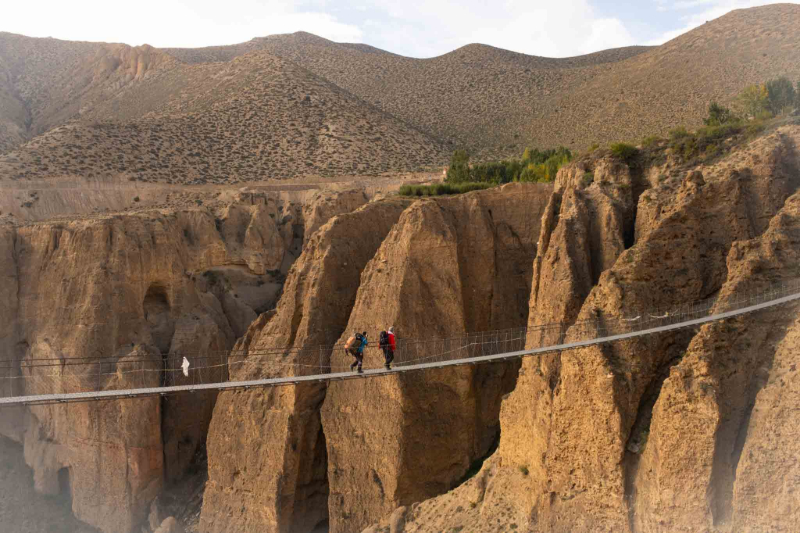
The kata was tied to my backpack as we made our final descent to Tetang, 11 hours after we began the day, through a sleeve in the rocks. The trail narrowed and became more menacing. Exposed cliffs dropped precipitously on both sides. One wrong step, and I’d fall into the abyss. With a pure heart and complete focus, I followed, ever so slowly, in Raju’s footsteps.
Upper Mustang: If you go…
A trek to the once-forbidden kingdom of Upper Mustang is the adventure of a lifetime. Here are a few tips to help make this trip unforgettable.
When to go: Spring and fall is the best time for trekking, when the skies are generally sunny and temperatures moderate. April and October are considered peak months.
Trek Operators: Friends Adventure Team founded by Rajendra Lama, is an established, recommended outfitter specializing in treks throughout Nepal including Upper Mustang. A 20-day itinerary including the Upper Mustang trek and stays in Kathmandu and Pokhara, with time for visiting UNESCO cultural sites, starts at about $2,850 per person for two.
Other operators that organize Mustang treks include Third Rock Adventures (https://www.thirdrockadventures.com/nepal-tibet-bhutan) and Marvel Adventure (https://www.marveladventure.com/)
Permits: A permit and Nepali guide is required for trekking in Mustang. This can be arranged through a trek operator.
Maps: Upper & Lower Mustang: Comprehensive Trekking Map #NA518, published by Nepa Maps and available on Amazon.
Comment