

 °C
°C For the love of momos – The snack food everyone in Nepal falls in love with
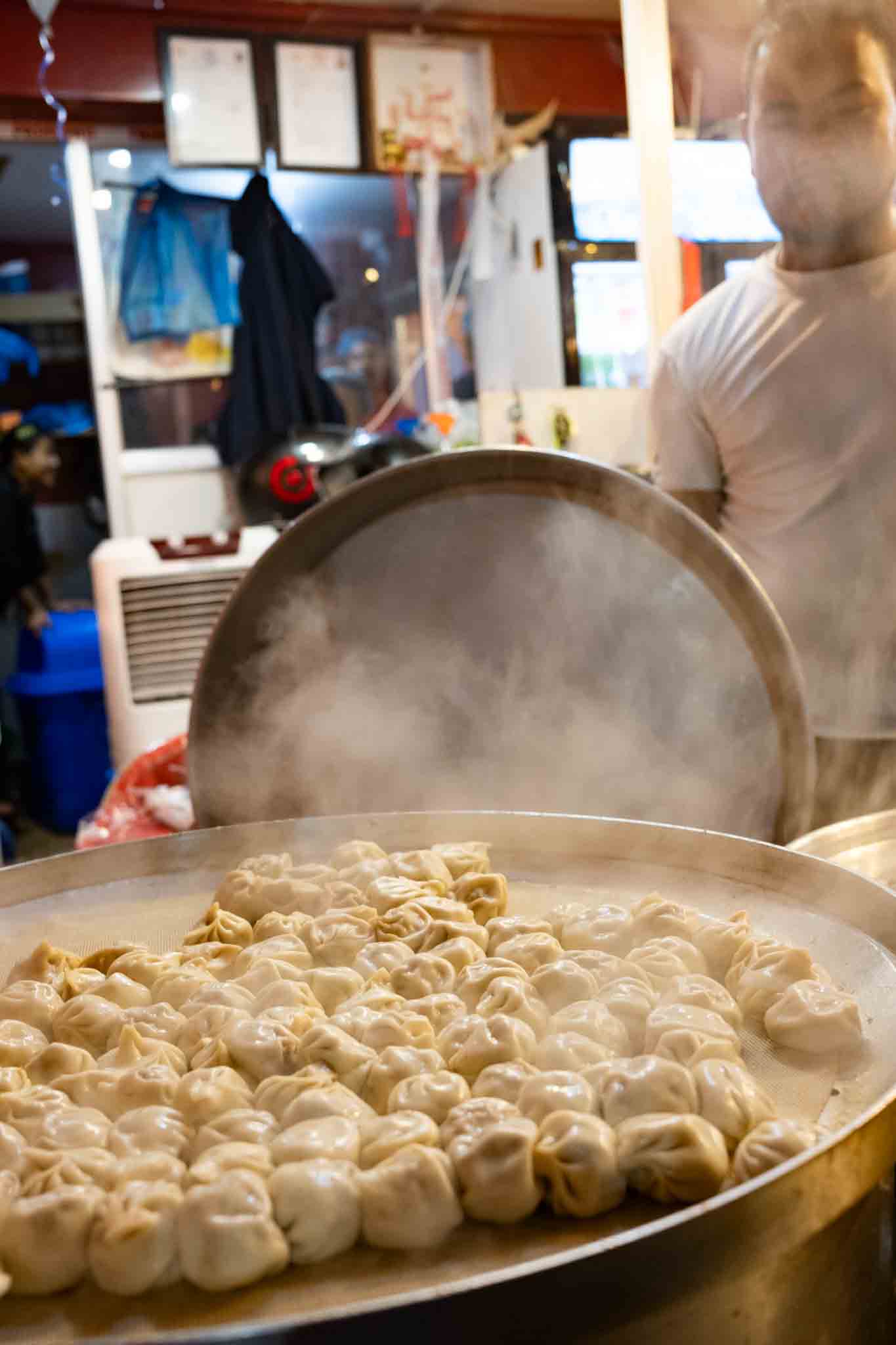
It was a cool February day as I toured the medieval city of Bhaktapur in Nepal. Amid the ornate pagodas and religious statues of Taumadi Square, a UNESCO World Heritage Site, a plume of steam caught my eye.
There, tucked into a quiet street, in the shadow of the five-story Nyatapola Temple was a hole-in-the-wall eatery. No name, no neon sign, just swirling steam and the smell of something heavenly. My kind of food.
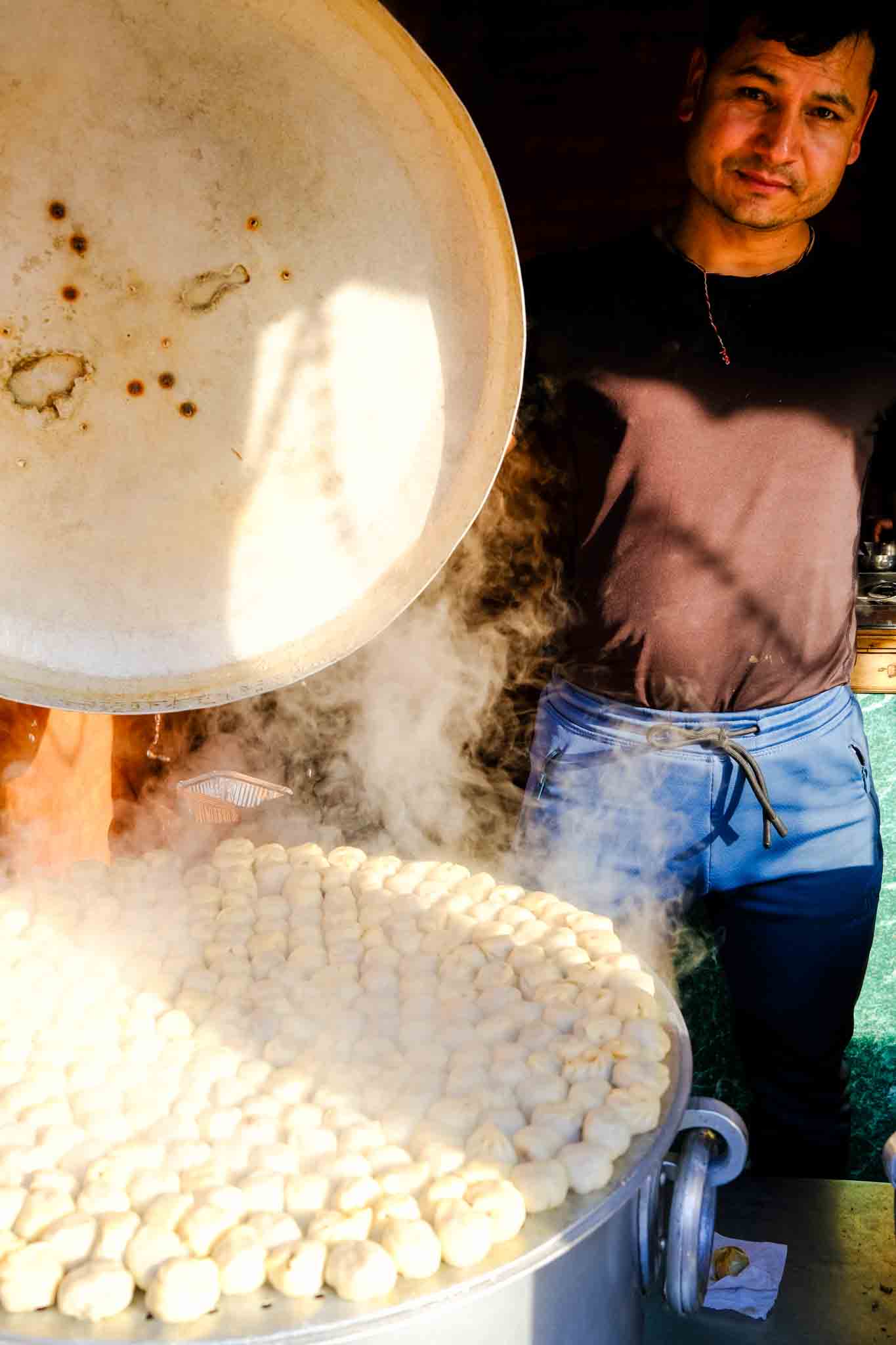
The owner stood proudly at the entrance, lording over a military-grade steamer. As I approached, he lifted the top, smoke swirled upward and before me I saw dozens of golf-ball-sized momos inside. My mouth watered.
My guide, Susan Manandhar, noticed. “Would you like to try some momos?” she asked. We grabbed a table in the back; behind me I peered into a small room, where the owner’s family sat around a bench, collectively filling pockets of dough with an exotic assortment of meat and vegetable fillings.
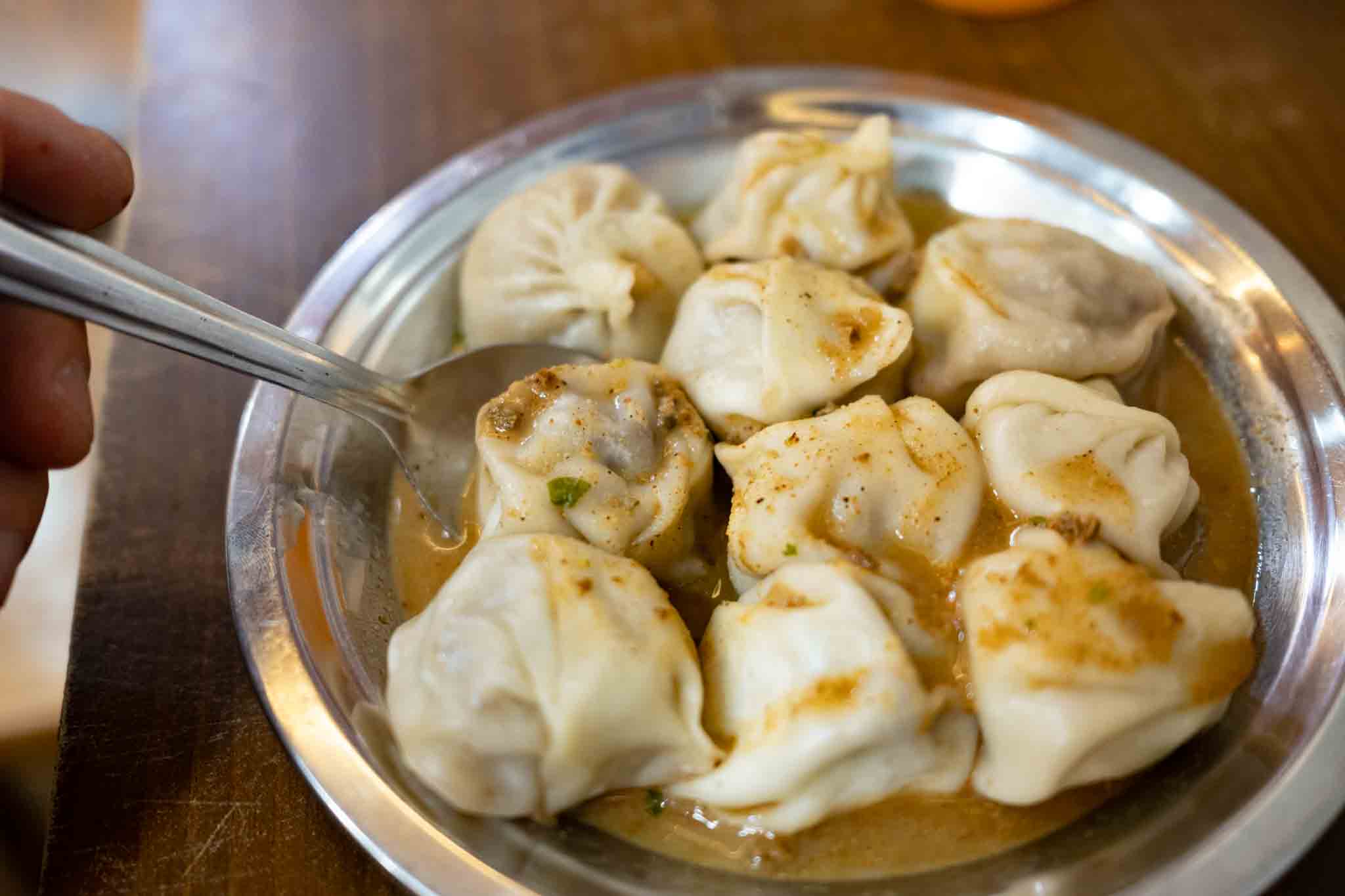
We split an order of 10 momos, served unpretentiously in a stainless steel bowl and drizzled with a spicy tomato sauce. “Momos are mostly a snack food for the afternoon,” Susan said. “When Nepalis go shopping, what do we eat? We have momos and we are satisfied.”
Indeed, I left the establishment satisfied and ready to walk more of this city known to locals by its traditional Newari name of Khoupa or City of Devotees.
To the uninitiated, momos are a close relative of Chinese dumplings (jiaozi) and Japanese gyoza, and Nepal’s version is the dish everyone falls in love with. Momo stands dot the country, particularly in Kathmandu, where vendors are as ubiquitous as prayer flags during festivals and special occasions, which are often.
Legend has it that these savory snacks originated in Tibet and were introduced to Nepal by Tibetan immigrants who settled in the Kathmandu Valley. Over the centuries, momos have become synonymous with the country’s food culture and cuisine.
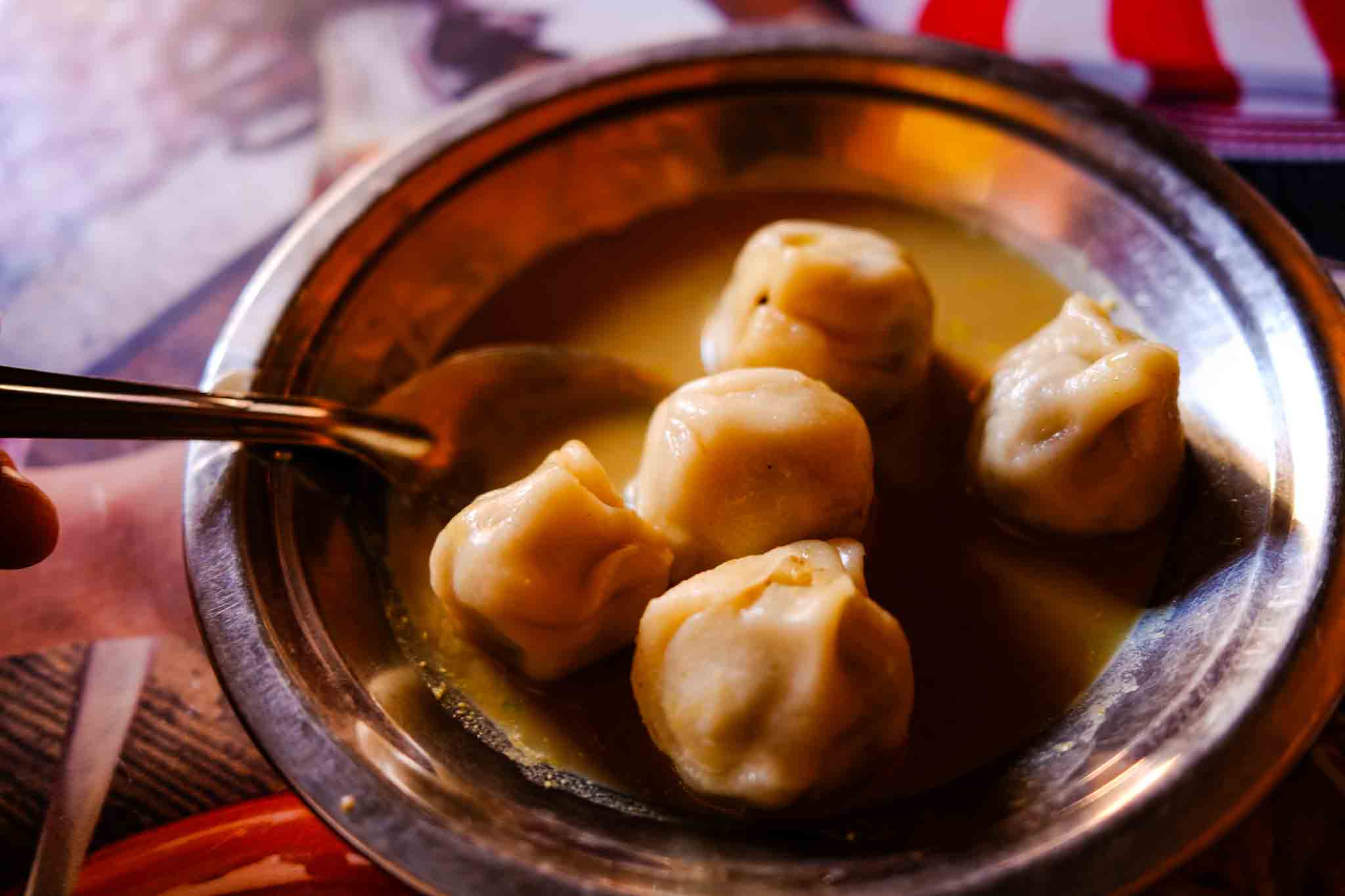
Dreaming of momos, I returned home to the United States and sought them out. I found restaurants serving Himalayan cuisine on East Houston Street in New York City; on honky-tonk Aurora Avenue in Seattle; and even along Highway 82 in Glenwood Springs, Colorado. But I longed to return to the source.
Eight months later, I was back in Nepal – it was October and the festival season. Once again with Susan’s help, I learned how to make momos. Susan, being one of only a few female guides in Nepal, not only is well-versed in interpreting cultural treasures, but also attuned to the cuisine of her country and those who are master chefs in their field.
Originally, I found Susan on the Internet. After exchanging a few emails, she designed for me a week-long private itinerary that encompassed the best of Kathmandu and Nepal’s second-city Pokhara, along with a couple of nights in small villages surrounded by Himalayan peaks. It was the perfect introduction to this nation and its intoxicating landscapes and peoples – now I hoped to dig deeper.
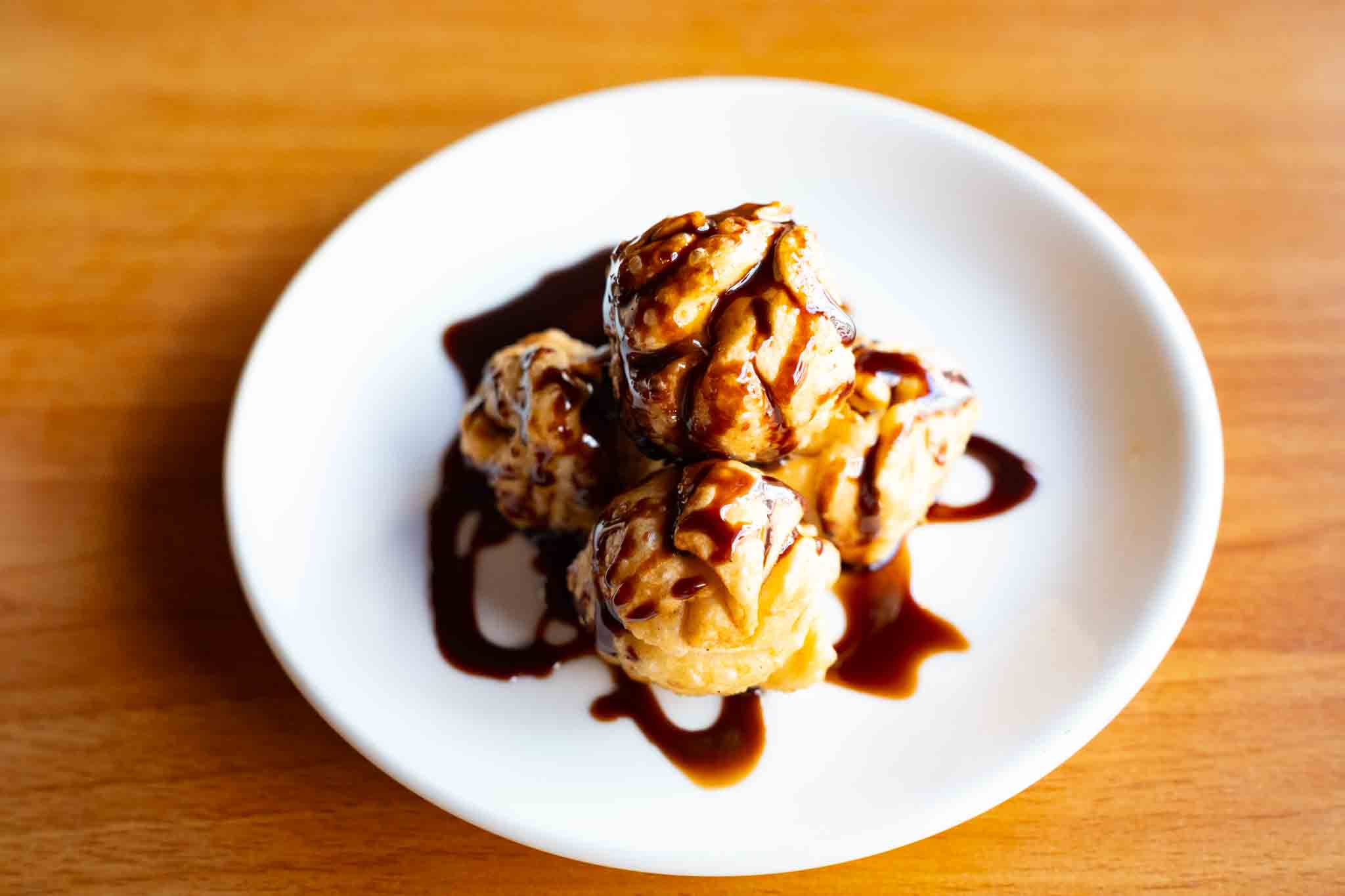
Before I had even unpacked my backpack, Susan picked me up and we went to a Kathmandu market to buy minced buffalo meat, a readily available item. “Buff momos are the most popular style here,” she said, adding that there’s a whole world of types including steamed; fried; the hot-and-spicy chile and sadeko styles; and even chocolate momos for dessert.
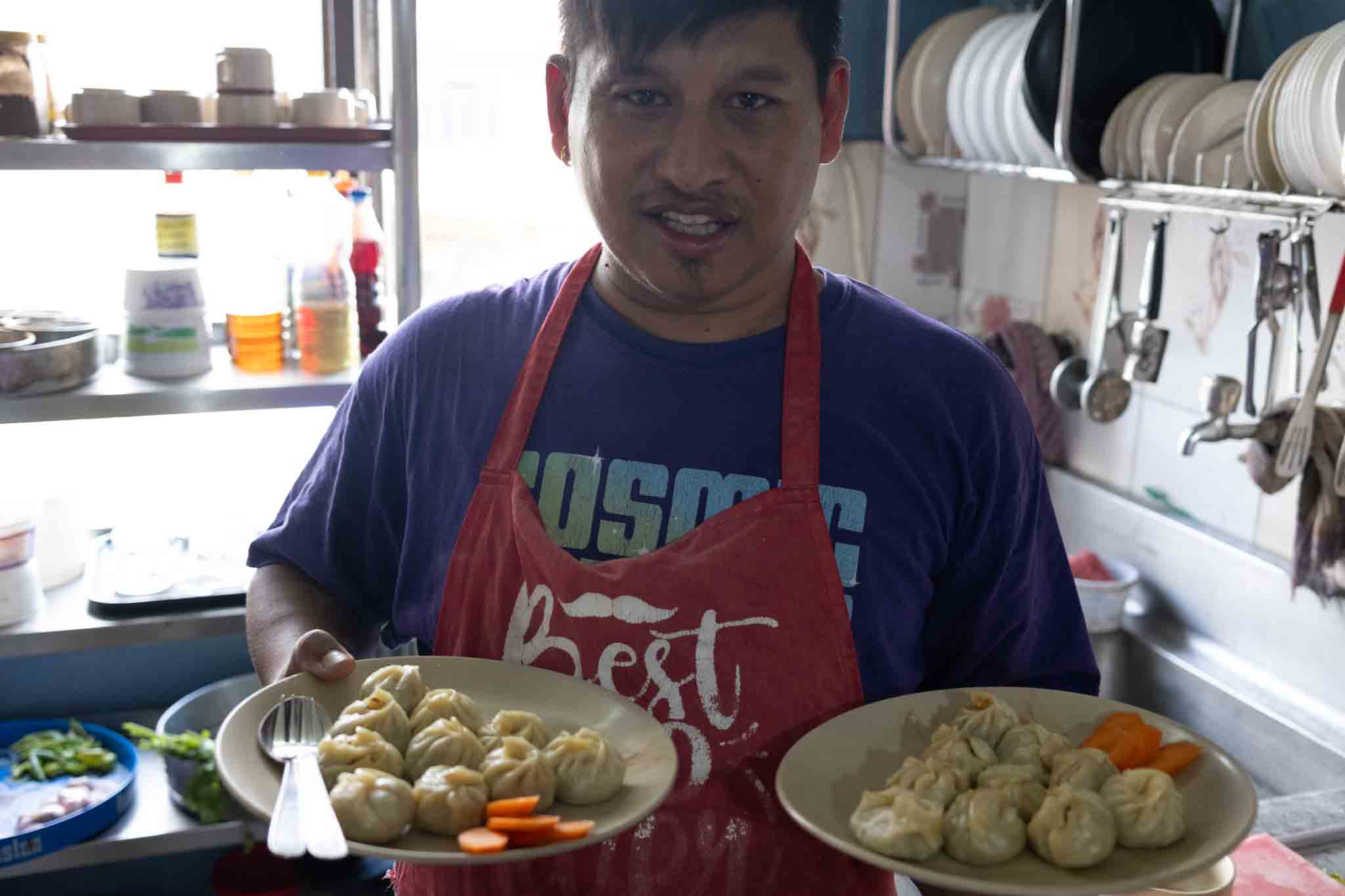
After maneuvering the city’s notorious traffic, Susan and I drove to New Highway Restaurant, where a local chef named James Mali has been perfecting his momo-making recipes and craft.
Everything in James’s kitchen is made from scratch. First, James showed me how to prepare the dough with a combination of flour and bottled water. The key, he explained, was to let the dough sit for about 30 minutes so that it softens. Then, it was time to mix the minced buffalo meat with a tantalizing medley of spices including cumin, turmeric, and garam masala, along with onion and coriander.
At the same time, James began preparing the chutney (or sauce) in a wok. Into the sizzling oil, he gently tossed small tomatoes, onion, garlic, red and green chilies until the fragrance filled the kitchen and the mixture began to simmer. Then, he added raw peanuts, more garlic, freshly squeezed lemon juice, and sesame seeds.
“This is my style – normal spicy,” he said through a translator. “Everyone has their own style of sauce.”
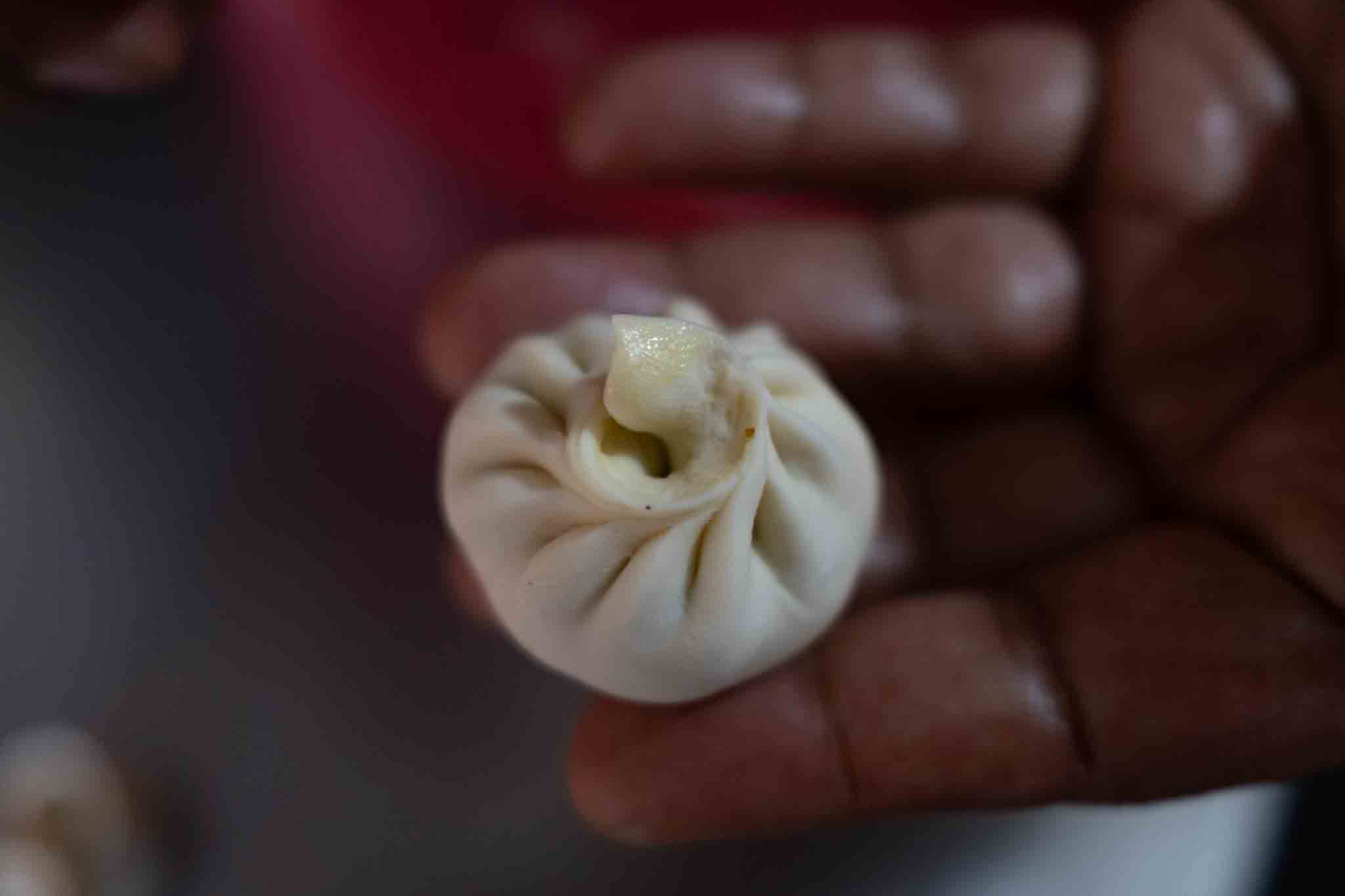
Momo production started as James cut the dough into cubes and rolled them into flat, circular pancakes. One by one, he deftly added the meat filling and wrapped the momo like a delicate perfect shell, pressing his fingers along the edges to keep them together. I always thought I was somewhat dexterous, having decades of experience tying flies for fly-fishing, but this momo-making work wasn’t as easy.
“You can also learn from YouTube,” James told me looking at my blob-like creations.
He then placed the filled momos in a steamer. Fifteen minutes later, we were feasting on some of the best momos in Kathmandu. Now, I had a new dish to add to my cooking repertoire at home. (I just had to work on my wrapping!)
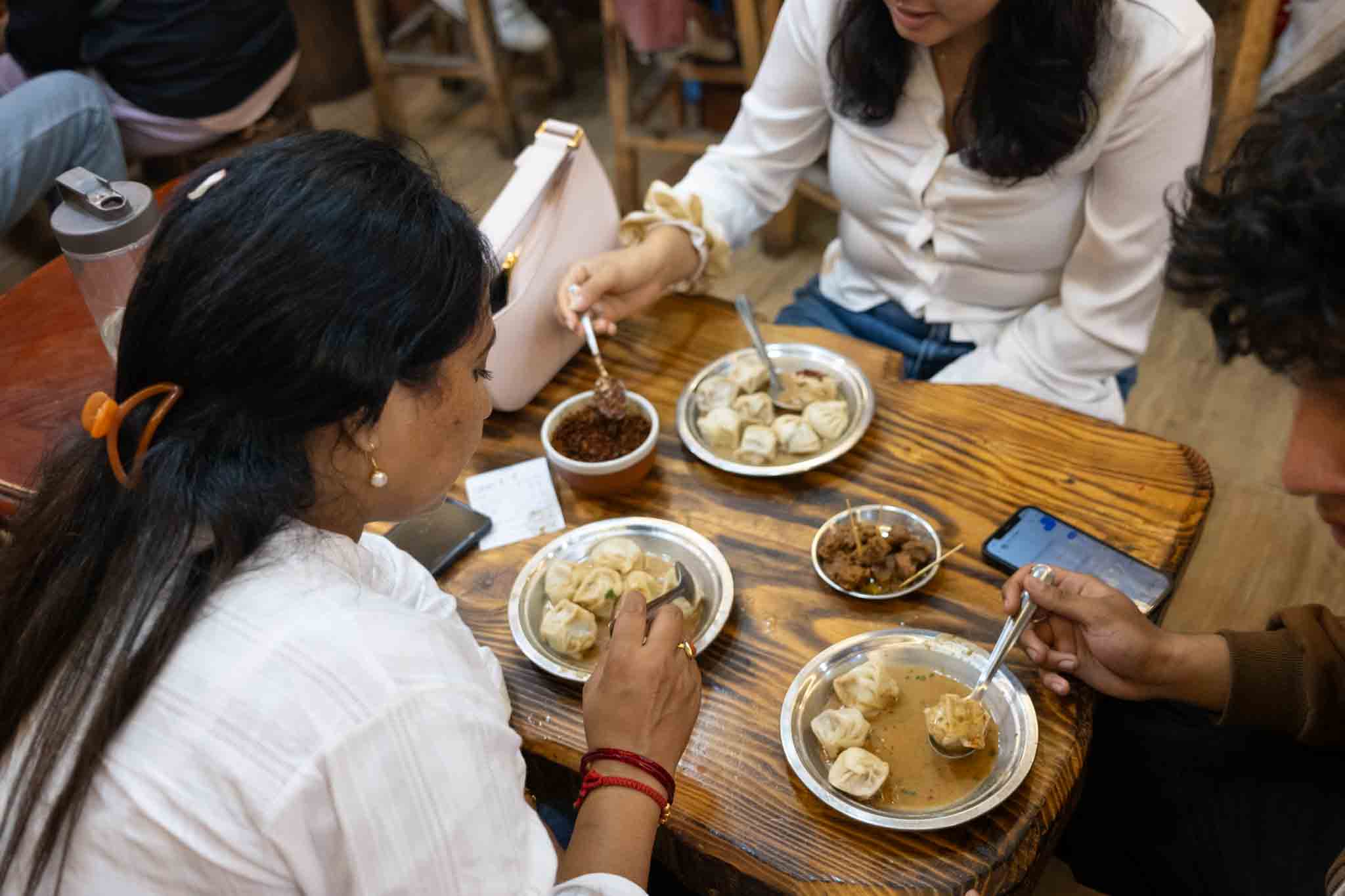
On my final night in Nepal, I sought out another momo restaurant that Susan had recommended, as all her suggestions from the best spot to catch sunrise over the Annapurna Range to the inside scoop on watching cremation ceremonies at Pashupatinath Temple in Kathmandu were spot on. The place was Narayan’s Dai ko Masangalli ko Momo, and it has been serving Kathmandu customers since 1962.
It was the first night of Diwali (or Tihar to Nepalis) – also known as the Festival of Lights – when brothers honor their sisters and offerings are given to the city’s dogs, crows, sheep, and monkeys. As I gobbled down an order of 10 buff momos, a woman at the next table caught my attention. She handed me a cup of chili flakes and suggested I sprinkle them on top.
We began chatting and I learned that Jamuna KC was showing her cousin, Kreety KC, around town. That included a stop to see the temples and pagodas of Durbar Square in Kathmandu, followed by a break for momos at Narayan’s.
“Everyone in Nepal loves to eat momos,” said Jamuna, 40. “From the school to the office to shopping – it’s momos for 365 days.”
Kreety, who grew up in Nepal but now lives in Boston, needed to “check momos off my list – it’s something I have to do every time I’m here.” The close cousins explained that momos aren’t typical Nepali food such as rice and dal (or lentils) “which is what we eat at home every day,” said Kreety.
“Momos are what we eat when we’re hanging with our friends,” Jamuna said. “Momos mean friends to me.”
As she spoke the streets outside the restaurant came alive as a parade of drummers and flutists marched by, celebrating the festival of Tihar, providing a booming soundtrack that bounced off the temple walls and echoed down the narrow Naradevi Street.
“This is why I fly all the way here,” said Kreety with a smile. “You can’t find this anywhere else.”
Where to find the best Momos
From Kathmandu to New York City, there is no shortage of restaurants serving classic Nepali momos. Here are a few recommendations:
In Nepal:
- Narayan’s Dai ko Masangalli ko Momo – Informal, bustling eatery serving four types of beloved momos since 1962. Naradevi Street, Kathmandu.
- Momo Hut – This restaurant in the tourist district of Thamel is the place to try chocolate momos. Thamel Marg, Kathmandu.
- New Highway Restaurant – Locals-only spot with hand-crafted momos by chef James Mali. Kalankisthan Road, Kathmandu.
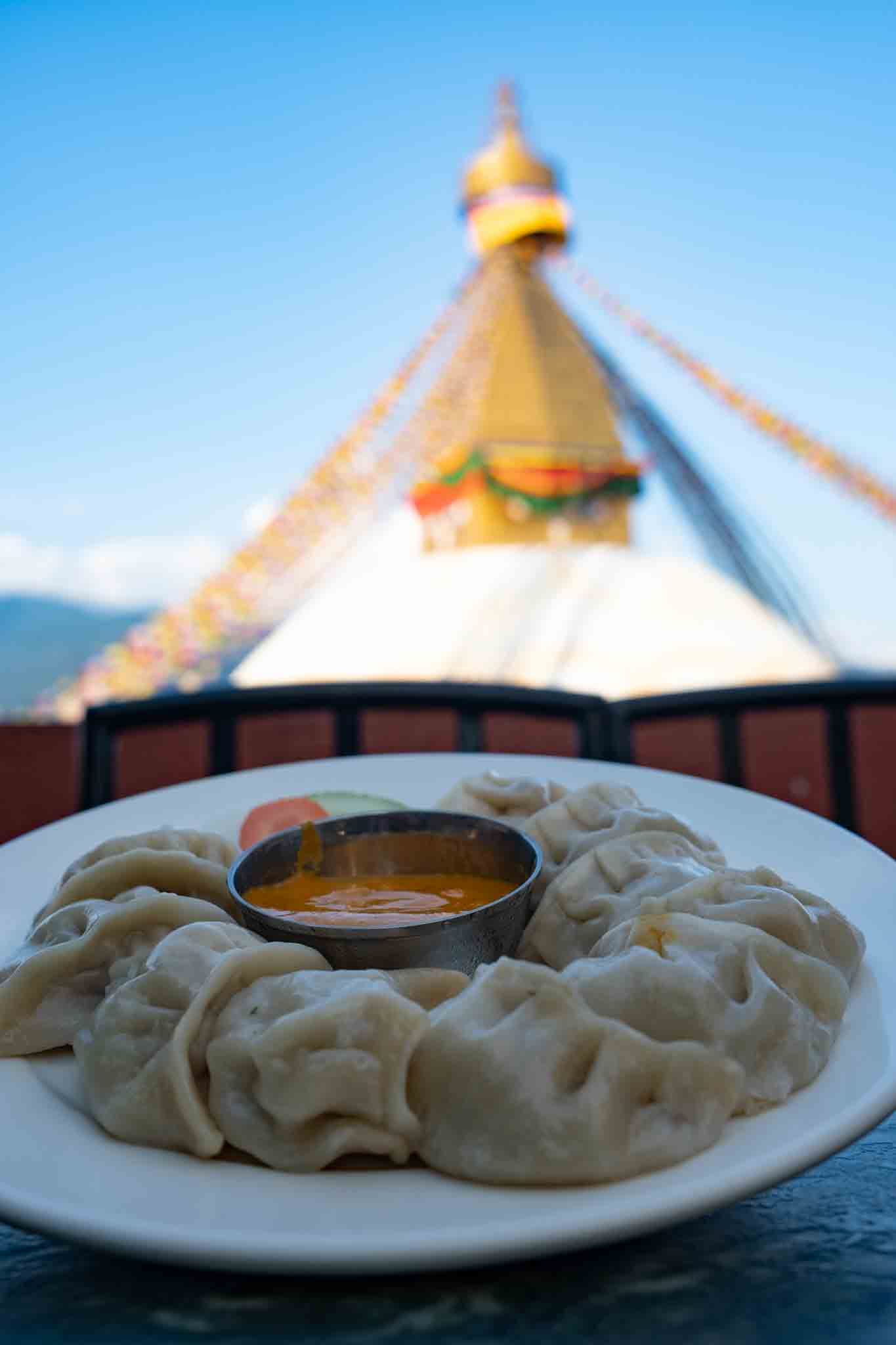
- View Himalaya Restaurant and Terrace – Enjoy your momos from a rooftop garden overlooking one of the world’s most famous Buddhist temples. Boudhanath, Kathmandu.
In the U.S.:
- Café Himalaya – This under-the-radar eatery in Lower Manhattan caters to a college crowd with a solid array of steamed and fried momos. 78 E 1st Street, New York City.
- India-Nepali Kitchen – Come here for the momo combination platter with steamed, fried, chili and sadeko styles. 9525 Aurora Ave North, Seattle. Nepal Restaurant -- Before hitting the slopes, get your momos to go at this Colorado hot spot. 6824 Highway 82, Glenwood Springs.
MOMO RECIPE
- Nepali Momos
Recipe from James Mali, co-owner of the New Highway Restaurant in Kathmandu
Total time – 2 hours
Momo ingredients
- 1 pound minced buffalo meat (or ground bison, beef, or chicken)
- 1 cup minced onion
- ½ cup minced coriander (or cilantro) stems
- 1 cup all-purpose flour
- 2 tablespoons water
- 2 tablespoons cumin
- 2 tablespoons turmeric
- 2 tablespoons garam masala
- 1/2 tablespoon chili powder
- 1/2 teaspoon mustard oil to taste
- Vegetable oil
- Carrots (for garnish)
Chutney (or Sauce) ingredients
- 1 cup chopped small tomatoes
- 1 cup minced onion
- 2 teaspoons minced garlic
- 1 cup chopped red and green chilies
- ½ cup freshly squeezed lemon juice
- ½ cup raw peanuts
- 2 tablespoons sesame seeds
- 2 tablespoons cumin seeds
- 2 tablespoons vegetable oil
Step 1 – In a bowl, combine the flour and water to make the dough. Cover and set aside for 30 to 60 minutes to let it soften.
Step 2 – Mix the meat, onion, and coriander (cilantro) stems. Then add in turmeric, chili powder, salt, garam masala and cumin. Plus, add ½ teaspoon of mustard oil. Use hands to mix thoroughly.
Step 3 – After letting the dough sit and soften, cut it into small cubes. Then use a rolling pin and roll them into flat circular mini pancakes about the size of a beer coaster. While making the wrappers, keep the rolled ones covered with a towel or plastic wrap to keep from drying out.
MAKE THE CHUTNEY (OR SAUCE)
Step 4 – In a wok, mix small tomatoes, onion, garlic, chilies, and vegetable oil on medium heat. Slowly and carefully add water after fully cooked. Add lemon juice and sesame seeds.
Step 5 – In a blender or mortar, combine all the ingredients until smooth. The sauce should be similar to siracha in consistency.
MAKE THE MOMOS
Step 6 – Lay the dough wrappers on a flat surface. Spoon about 2 teaspoons of filling into each wrapper, and then fold into a half moon while pressing the edges to seal.
Step 7 – Boil water in a steamer. Gently add the momos. Steam in batches for about 15 minutes. Serve immediately with carrots as a garnish and chutney on the side.
*Mustard oil, which is harvested and produced by hand the old-fashioned way in Kathmandu, is a must for authentic momos. It can be found in Asian or Indian markets.
All the Photos by Andrew Tarica






Comment